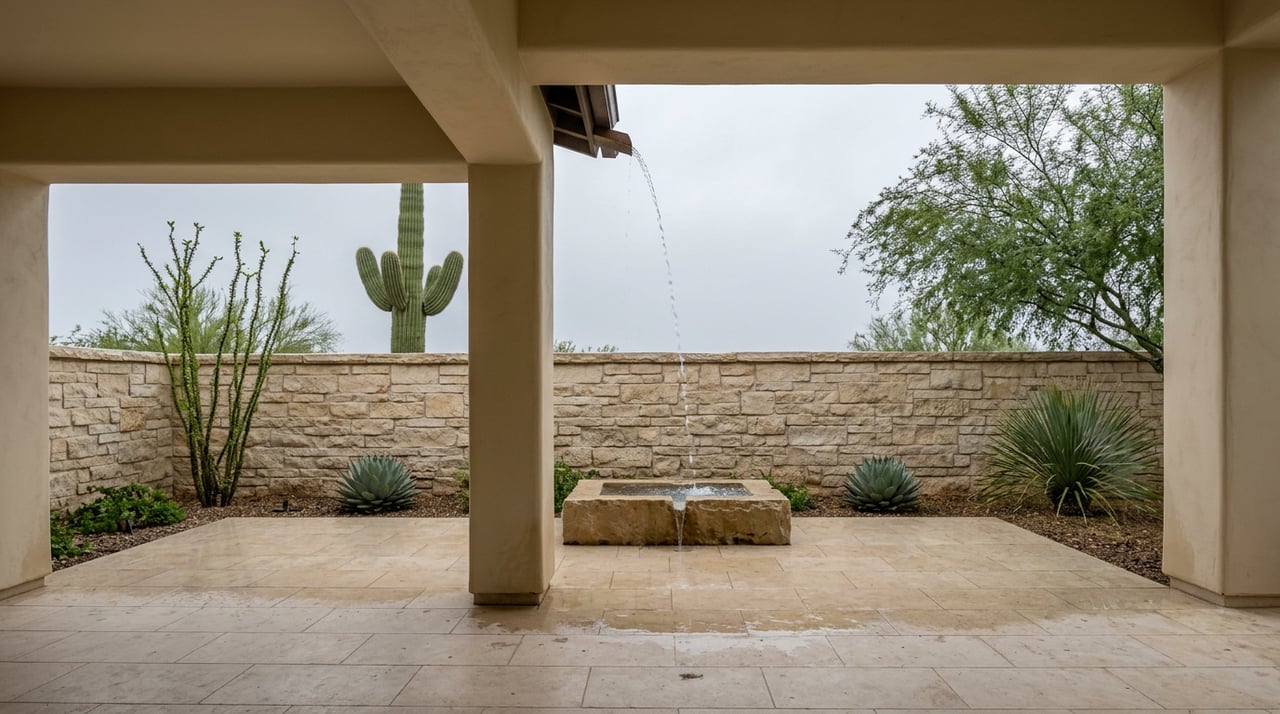
A resident who hiked the Sutherland trailhead on a Tuesday morning in early August this year could have crossed the first wash dry-footed, boots barely dusty. By Wednesday afternoon, after a single storm cell dropped rain over the Catalinas, that same crossing was running ankle-deep and cold. Nothing about the calendar changed between those two days. The rain did.
That gap is the part the generic seasonal guides skip. They will tell you Catalina State Park's monsoon runs roughly June through September, which is true and also close to useless if you are deciding whether to load the dog into the car this coming Saturday. The park's own trail notes are more honest about it: winter storms and summer monsoon rain, specifically named as the June through September stretch, may create seasonal water crossings on several named trails. May, not will. The season sets the odds. It does not set the day.
For anyone living near The Preserve at SaddleBrooke, Catalina State Park sits close enough along the Oracle Road corridor to be a realistic weekend stop, not a special-occasion drive. So the question worth answering isn't "is it monsoon season." It's which trails actually carry water when the rain does show up, and what the park does about the uncertainty in between.
The trails where the path literally meets the wash
Four named routes in the park cross water on a regular basis once the rains start, and each one carries a slightly different kind of risk.
- Alamo Canyon Loop Trail (3.2 miles, moderate, starting at the Romero Ruins Ramada parking lot) climbs through mesquite and desert willow before opening into grassland with views toward Leviathan Dome. The same notes that describe spring wildflowers along this trail also flag it for seasonal water crossings from June through September.
- Canyon Loop, built from the Romero Canyon Trail, the Sutherland Trail, and a connector between them, is one of the park's most popular routes precisely because it passes through a desert riparian stretch with tall sycamore and ash. That same shade and greenery depends on water crossing the trail, which is exactly what happens during the rainy stretch.
- Trail Link (2.2 miles, moderate), which connects the Sutherland and 50-Year trails on the park's north side, gets the same June-through-September caution for water crossings, on a rockier surface than the others.
- Catalina Vista Trail (1.7 miles, easy, out-and-back) is the one built as a safe alternative to walking the park road, wide and surfaced in compacted decomposed granite so runners, cyclists, and strollers can use it. It still carries the same seasonal crossing warning as the others. Even the trail designed to reduce risk doesn't fully escape the wash.
None of this means the park closes down for four months. It means the specific crossing on the specific trail you are planning to hike is a live question on any given week, not a settled fact you can look up once in April and carry through September.
Why Romero Pools only work some weeks
Romero Pools, reached via the Romero Canyon Trail, is the park's seasonal swimming spot, and "seasonal" is doing real work in that sentence. The pools fill after winter rains or during monsoon season, and the hike in is described as moderately strenuous even before you factor in water levels that are genuinely unpredictable week to week. A dry August means a dry hike to a dry destination. A wet one means the same trail, the same mileage, and an entirely different payoff at the end.
This is the kind of detail that matters more to someone who already lives fifteen or twenty minutes from the park than to a first-time visitor working off a single blog post. You can afford to wait for the right week. You just need a way to know which week that is.
A Saturday morning program during monsoon season
Here is one program that runs during monsoon season: Catalina State Park runs an interactive program called Monsoon Magic on Saturdays from July 4 through September 26, from 7 to 9 in the morning, gathered at the Trailhead Picnic Area. It is built around the wildlife and meteorology of the rainy season specifically, with rangers on hand, snake encounters included, and a chance for kids to become certified junior rangers. It runs during the stretch when trail conditions can be unpredictable.
The park also runs guided sunset strolls and separate nighttime hikes on the Nature Trail, held the first, third, and fifth Fridays of the month, registration required, that combine desert wildlife with the park's genuinely dark skies. Neither of these erases the need to check conditions before an unguided hike, but both give you a structured alternative during the weeks when self-navigating a wash crossing isn't worth the guess.
Entry itself is straightforward if you haven't been recently: $10 per vehicle with one occupant, $20 for two to four people, $5 for an individual arriving on foot or by bicycle. Worth knowing before you're at the gate deciding how many people are actually in the car.
What to know before you bring the dog
Dogs are welcome in Catalina State Park on leashes no longer than six feet, but they are not allowed in the surrounding Pusch Ridge Wilderness, which includes Romero Pools itself. So a dog can join you on the approach trail and not the swimming hole at the end of it.
The other detail worth knowing only shows up in trail reviews, not official signage: foxtail grass grows aggressively after monsoon rain along several of these routes, and it is genuinely dangerous for dogs. The seed heads can work into paws, ears, nose, or skin and cause real injury if not caught early. The manicured desert landscaping around a Preserve backyard and the real thing growing wild along a storm-fed wash are not the same plant community, and a dog that's only ever walked on decomposed granite and drip irrigation won't know to avoid it on its own.
Cell service holds up reasonably well through most of the park, though canyon sections can lose signal, and the Wi-Fi at the Visitor Center is limited enough that it shouldn't be treated as a backup plan. None of this is a reason to stay home. It's a reason to check conditions the morning of, rather than trusting whatever the trail said in April.
The actual takeaway
"Monsoon season" as a four-month label tells you almost nothing useful for a Saturday morning decision. The washes on Alamo Canyon, Canyon Loop, Trail Link, and even the easy Catalina Vista Trail don't run on a fixed calendar. They run on whatever storm passed through the Catalinas in the last day or two. The park's Saturday program is one option during this unpredictable season.
If you're already living near enough to make this a regular loop rather than a special trip, keep the practical point in mind: conditions can change from week to week, and the Saturday program is one option during monsoon season.
If you're weighing what it actually feels like to live within reach of trails like these year-round, that's a conversation worth having with someone who knows this stretch of the Catalinas personally. Desert Refined by Team Platinum has spent years inside the SaddleBrooke and Preserve communities and can talk through what daily life here really looks like, in every season. Let's Connect.